
Generators
Generac Annual Generator Service in NH: What the 18-Point Checklist Covers
Published 7 min readBy Copp Electric
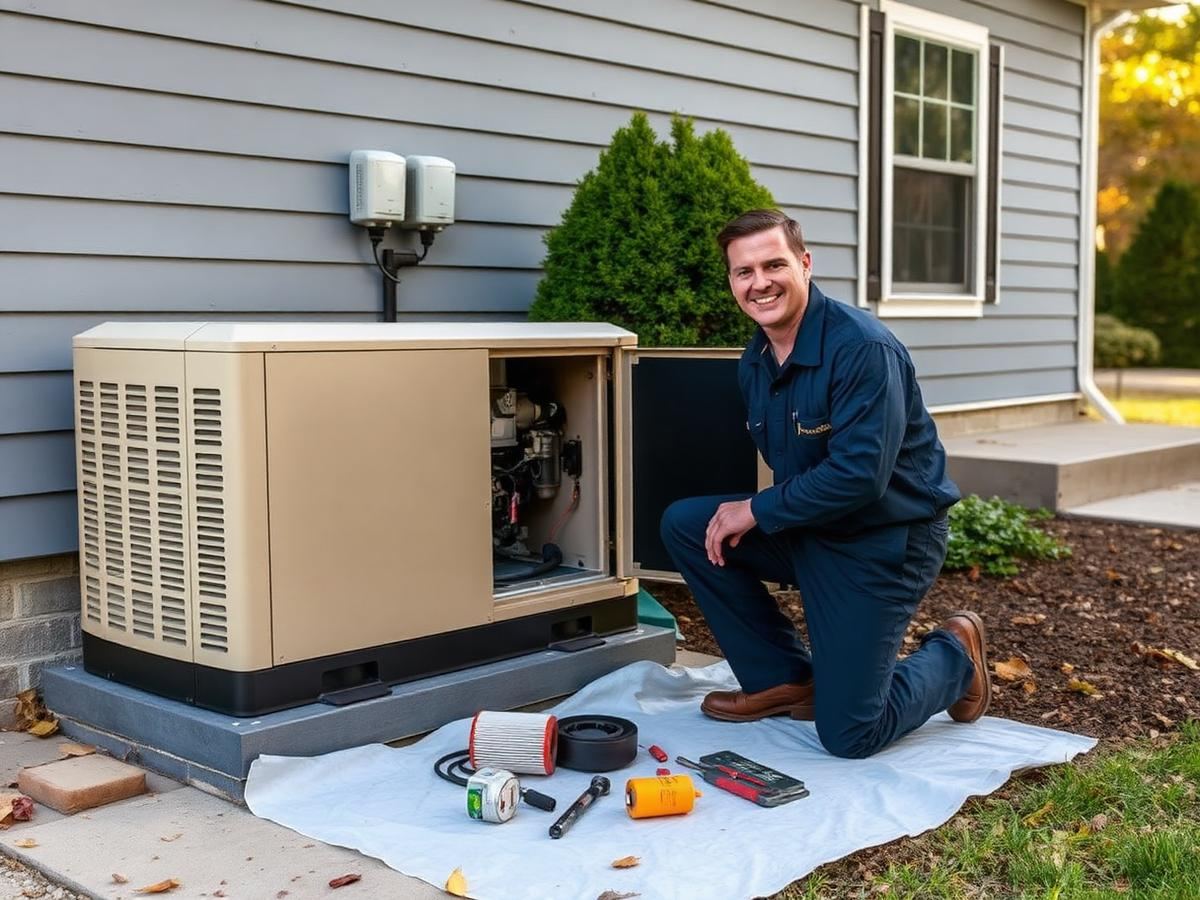
Annual Generac service is a scheduled maintenance visit performed by factory-trained technicians. Copp Electric's basic plan is $350 and covers an 18-point checklist — oil and filter changes, spark plugs, battery service, gas line inspection, AC and DC voltage readings, and a written report compared against previous years.
Key takeaways
- Standby generators need service once a year, or after roughly every 100–200 run hours, whichever comes first.
- Copp Electric's basic annual plan is $350 and includes an 18-point service checklist with a written report.
- Every item is compared against the previous year's report, so wear shows up as a trend before it becomes a failure.
- Service is performed by factory-trained Generac technicians and keeps your maintenance record intact for warranty purposes.
- The visit is the difference between a generator that starts during an outage and one that cranks and quits.
Why a standby generator needs annual service
A whole-house standby generator is an engine that sits outside all year and is asked to start, carry your entire house, and run for hours or days — usually on the worst night of the year. It spends 99% of its life idle. That is exactly why it fails: oil breaks down, batteries lose capacity in the cold, spark plugs foul, filters load up, and rodents find the warm dry space behind the enclosure.
Regular service exists to catch all of that while the power is still on. It is the single highest-value thing you can do for a generator, and it is the reason well-maintained units routinely last well past a decade while neglected ones fail on the first real call.
How often should a Generac generator be serviced?
Once a year for a typical New Hampshire home, or after roughly every 100 to 200 run hours if you lose power often — whichever comes first. Air-cooled residential units generally follow the annual interval; liquid-cooled and commercial standby units are on tighter schedules because they carry more load and log more hours.
If a unit has been in service for several seasons without a documented visit, treat the first appointment as a catch-up service rather than routine maintenance. There is usually more to correct than an oil change.
What the 18-point service checklist covers
Annual service is a defined checklist, not a look-and-listen. These are the core items performed on every visit:
- Oil change with the correct weight and capacity for your unit
- Oil filter change
- Air filter change
- Spark plug replacement
- Gas line inspection — fittings, flex connector, and regulator condition
- Battery service, including terminals, charge condition, and load check
- Voltage readings, AC and DC, recorded on the report
- Interior cleaning of the unit — debris, nesting material, and rodent evidence
- Full 18-point checklist completed and a written report left with you
The list above covers the items customers ask about most. The full 18 points also include controller, enclosure, mounting, and operational checks, all recorded on the report you receive at the end of the visit.
The part most homeowners never see: the live test
Changing fluids is only half of it. The visit finishes with the unit exercised under real conditions — the transfer switch operated, the engine brought up, voltage and frequency verified while carrying load, and the controller checked for stored faults and correct exercise schedule.
This is the step that answers the only question that actually matters: if the power drops tonight, does this machine come on and stay on? A generator that passes a fluid change but faults under load is still a generator that will let you down.
Why the year-over-year report matters
Each item on the checklist is compared against the previous year's report. That comparison is where the real value sits, because most generator failures announce themselves as a trend long before they become a breakdown.
A battery that read fine last year and marginal this year gets replaced before the January cold finds it. A voltage reading that has drifted, a filter that loaded faster than expected, a fuel pressure that is not where it was — none of those look alarming in isolation. Side by side across seasons, they tell you what to fix now and what to budget for next year.
You also end up with a documented maintenance history, which matters for warranty claims and is worth real money if you sell the house with the generator on it.
What New Hampshire does to a standby generator
Conditions here are harder on standby equipment than the manuals assume. Sub-zero cold starts drain a weak battery in seconds, which is the number one reason a unit cranks and will not catch. Ice storms mean long run hours, so oil and filter condition going into winter decides whether the engine survives a three-day outage.
Propane is common on rural properties, and regulator and line condition matter as much as anything inside the enclosure — a unit that runs fine at low draw can starve when the whole house comes on. Rodents nest in enclosures over winter and chew wiring. Well pumps mean no power equals no water, so the failure mode here is not inconvenience, it is an uninhabitable house.
What annual service costs
The basic annual service plan is $350 — comprehensive service you can count on, year after year. That covers the 18-point checklist, the consumables listed above, the operational test, and the written report.
| Item | Detail |
|---|---|
| Basic plan | $350, comprehensive annual service |
| Checklist | 18 points, written report each visit |
| Consumables | Oil, oil filter, air filter, spark plugs |
| Comparison | Every item compared to previous years' reports |
| Performed by | Factory-trained generator technicians |
| Interval | Once per year, or every 100–200 run hours |
Parts outside the routine consumables — a failed battery, a controller, a fuel component — are quoted separately before any work is done. You get a real number, not a surprise on the invoice.
Signs your generator needs service now
- It cranks longer than a couple of seconds before starting, or does not catch at all
- The weekly exercise cycle has stopped running, or you cannot remember hearing it
- A yellow or red status light, or any stored fault on the controller
- It starts but drops out when the house load comes on
- Visible oil weeping, corrosion on battery terminals, or nesting material in the enclosure
- More than a year — or an unknown amount of time — since the last documented service
If the unit has already failed during an outage, that is an emergency call rather than a maintenance visit. Copp Electric takes emergency electrical calls across the Lakes Region, nights and weekends too.
Units we service
Copp Electric's technicians are factory-trained on Generac, which is what the large majority of standby units in this area are. We service units we installed and units we did not, and we take on neglected generators that have gone several seasons without attention.
We work across Franklin, Tilton, Northfield, Belmont, Laconia, Concord, Sanbornton, Boscawen, plus Bristol, Center Harbor, Gilford, Loudon, Meredith, Moultonborough, and New London.