
Generator Installation
Whole-House Generator Installation in Franklin, NH
Copp Electric installs whole-house standby generators for homes across Franklin and the Lakes Region. We size the unit to your actual load, set the pad, wire the automatic transfer switch, pull the permit, coordinate the gas hookup, and commission the system so power restores automatically within seconds of an outage.
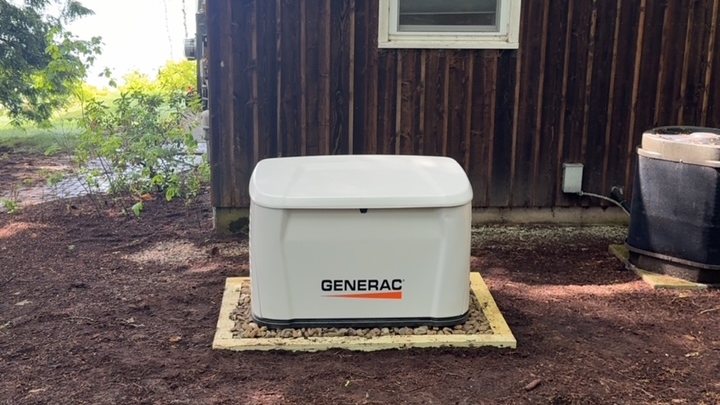
What’s included
- Authorized Generac dealer: factory warranty registration and factory-trained installation
- Load calculation and generator sizing for your real usage, not a guess
- Concrete or composite pad set and leveled
- Automatic transfer switch installation and panel integration
- Coordination with your propane or natural gas supplier
- Permit filing and inspection scheduling
- Full commissioning, load test, and homeowner walkthrough
- Optional annual service plan to keep the warranty and the unit healthy
Signs you need this
- Outages last more than a few hours where you live
- You are on a well — no power means no water
- You heat with a boiler or furnace that needs electricity to run
- You work from home and cannot lose connectivity
- You have a sump pump, medical equipment, or a full freezer to protect
How the job runs
- 1
Site visit
We walk the property, review your panel, and calculate the load you actually need to carry.
- 2
Written proposal
You get a fixed scope covering the unit, transfer switch, pad, permits, and gas coordination.
- 3
Install day
Pad set, generator placed, transfer switch wired, fuel line coordinated with your supplier.
- 4
Inspection & commissioning
We pull the permit, meet the inspector, run a live load test, and show you how it works.
What it costs
Most whole-house standby generator projects in this area run in the mid-four to low-five figures installed, driven mainly by unit size, transfer switch type, and distance from the panel and gas line. We give you a fixed written number before anything is ordered.
Generator Installation questions
- How long does a standby generator installation take?
- Most residential installations are completed in one to two days on site once the unit and permit are in hand. Utility or propane supplier scheduling is usually the longest lead item.
- What size generator do I need for my house?
- It depends on whether you want whole-house coverage or essential circuits only. A typical New Hampshire home with well, heat, and kitchen runs 18–26 kW for full coverage. We calculate it from your actual panel and loads.
- Do I need a permit for a generator in New Hampshire?
- Yes. Standby generator installations require an electrical permit and inspection, and often a gas permit. Copp Electric files the paperwork and meets the inspector as part of the job.
- Can a generator run on propane?
- Yes. Most homes in the Franklin area run standby generators on propane, and many units can be configured for natural gas where it is available. We coordinate the hookup with your fuel supplier.
Get a quote for this
Send the details and we will follow up.
Available across the Lakes Region
- Generator Installation in Franklin
- Generator Installation in Tilton
- Generator Installation in Northfield
- Generator Installation in Belmont
- Generator Installation in Laconia
- Generator Installation in Concord
- Generator Installation in Sanbornton
- Generator Installation in Boscawen
Further reading
- GeneratorsWhat Does a Whole House Generator Cost in New Hampshire, Installed?
- Panel UpgradesWhat a 200 Amp Panel Upgrade Costs in New Hampshire
- GeneratorsInstalling a Whole-House Generator Before Winter in New Hampshire: Timeline, Cost Factors, and What's Involved
- GeneratorsGenerac Annual Generator Service in NH: What the 18-Point Checklist Covers
Other services
Need an electrician who shows up and does it right?
Call any time for a straight answer, or send the details and we will follow up with a written quote.
Franklin, New Hampshire · Open 24 hours, 7 days a week