
Rewiring
What It Costs to Rewire a House in New Hampshire
Published 8 min readBy Copp Electric
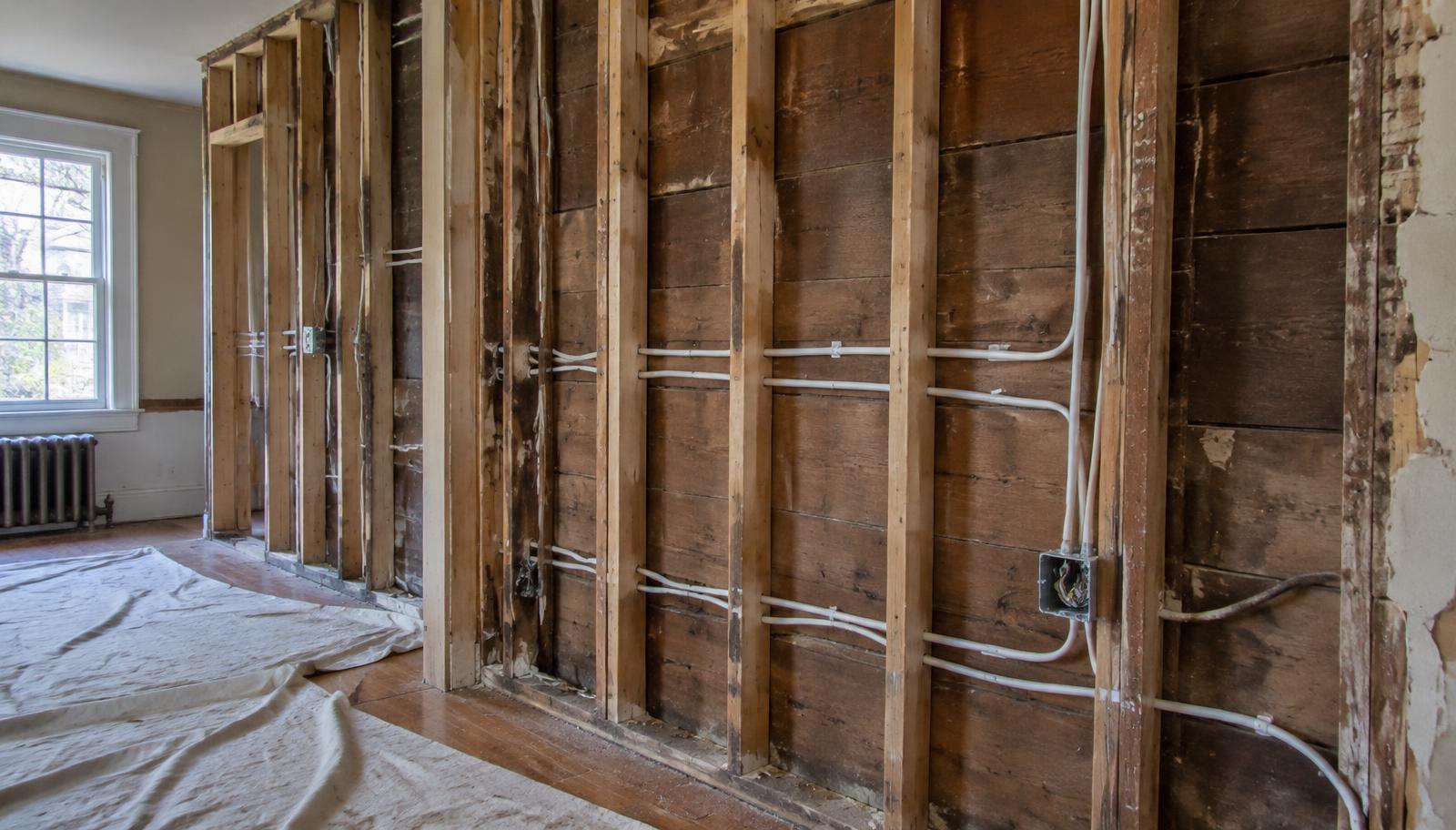
Rewiring a house is priced by the number of circuits and how hard the walls are to get into, not by square footage alone. In New Hampshire the big variables are knob and tube or cloth wiring, plaster versus drywall, attic and basement access, and whether the service has to be upgraded at the same time. A written quote after a walkthrough is the only honest number.
Key takeaways
- Rewiring is priced per circuit and per level of difficulty, not per square foot. Two houses the same size can be thousands apart based on access alone.
- Plaster and lath, balloon framing, and blocked stud bays are the most common cost drivers in Lakes Region housing stock.
- Most full rewires also need a service and panel upgrade, because the old panel usually cannot carry the new circuit count.
- A rewire can be staged by floor or by area so it fits a budget, and so you can keep living in the house while it happens.
- Anything that touches permanent wiring is permitted and inspected work in New Hampshire. A quote that skips the permit is not a cheaper job, it is an uninspected one.
What actually drives the cost
The honest answer is access. Pulling new wire through an open stud bay in a 1990s ranch is a fraction of the labor of fishing that same wire through plaster, lath, horsehair insulation, and blocking in a house built before 1930.
After access comes count. Every device, every home run, every appliance circuit, and every light is labor and material. A kitchen alone can carry a dozen circuits under current code, which is why kitchens and baths dominate the price of a partial rewire.
The third factor is what has to come along for the ride. A full rewire usually forces a panel decision, because the old panel does not have the spaces or the capacity for a modern circuit count.
| Variable | Why it changes the number |
|---|---|
| Wall construction | Plaster and lath is slower to open, patch, and restore than drywall |
| Attic and basement access | Open access lets wire be dropped and pulled; low crawl space or finished ceilings mean opening walls |
| Knob and tube or cloth wiring | Old conductors are removed, not reused, and often reveal splices outside boxes |
| Circuit count | Kitchens, baths, laundry, and HVAC each carry required dedicated circuits |
| Service and panel | Most rewires need 200 amp service and a new panel to land the circuits |
| Occupied or empty | Working around furniture and a family in the house takes longer than an empty house |
| Finish restoration | Patching, priming, and painting after the wire is in is a real line item |
Partial rewire versus full rewire
Not every house needs everything replaced. Plenty of Lakes Region homes have been partially updated over decades, so what is left is a few original circuits feeding bedrooms and a hallway, with the kitchen and bath already redone.
A partial rewire targets what is actually old or unsafe: ungrounded two prong outlets, knob and tube in the attic, a feed spliced outside a box, or aluminum branch wiring. A full rewire replaces every branch circuit in the building.
The right answer comes out of a walkthrough with the panel open and a few boxes pulled. That is a half hour of looking, and it decides whether this is a targeted job or a whole house job.
If you are planning insulation, siding, or a gut remodel on any part of the house, that is the moment to rewire that area. The walls are already open and the labor collapses.
Knob and tube, and why insurers ask about it
Knob and tube wiring was installed in New Hampshire homes into the 1950s. It is not automatically an emergency, but it has no ground, its insulation gets brittle with age and heat, and it was never designed for the load a modern household puts on it.
The practical problem is often insurance rather than physics. Carriers increasingly ask whether a home has knob and tube, and some decline to write or renew a policy until it is removed. That turns a someday project into a closing deadline.
Removal means the old conductors come out where they are reachable and every device is fed with new grounded cable. Where a run is buried inside a finished wall, it gets disconnected and abandoned safely rather than left energized.
The service upgrade that usually comes with it
A house being rewired is almost always a house that needs more service. Sixty and one hundred amp services were sized for a very different list of appliances than a heat pump, an induction range, a well pump, and a car in the driveway.
Two hundred amps is the working baseline for a rewired single family home in this region. The load calculation is run from the actual appliance list, not from square footage, and it decides both the service size and how much room is left for what you buy later.
Doing the service and the rewire together saves money, because the utility coordination, the permit, and the shutdown happen once instead of twice.
How long it takes, and living in the house
A full rewire on an average Lakes Region home runs one to three weeks of electrical work, with the service portion inside that adding a single day of power off. A partial rewire is often two to four days.
Most homeowners stay in the house. The work is staged by area so you always have power somewhere, and the rough inspection happens before any patching closes the walls.
The part people underestimate is finish work. Wire goes in fast compared to the patching, priming, and painting behind it, so either plan for that in the schedule or plan the rewire right before you were going to paint anyway.
| Stage | What happens |
|---|---|
| Walkthrough and quote | Panel opened, boxes pulled, scope and written number |
| Permit | Filed with the town before work begins |
| New service and panel | Utility coordination, meter, panel, grounding. Power off part of one day |
| Branch rewire | Circuits run area by area, old conductors removed |
| Rough inspection | Inspector sees the work before anything is closed up |
| Devices and trim | Outlets, switches, plates, fixtures, labeled panel directory |
| Final inspection | Town signs off on the completed installation |
How to compare two rewire quotes
The cheapest number is usually the one that left something out. Before comparing two quotes, check that both include the same circuit count, the same service work, the permit, and the same amount of patching.
Ask specifically whether the old conductors are being removed or just abandoned, whether the panel directory will be labeled, and who patches the walls. Those three answers explain most of the gap between two prices.
We quote rewires in writing after a walkthrough, with the service work, the branch circuits, the permit, and the restoration listed separately, so you can see exactly what you are comparing.
We work across Franklin, Tilton, Northfield, Belmont, Laconia, Concord, Sanbornton, Boscawen, plus Bristol, Center Harbor, Gilford, Loudon, Meredith, Moultonborough, and New London.